Who decides what is African?
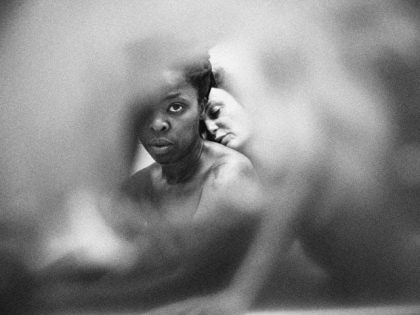
The photographer Zanele Muholi equally mourns and celebrates South African queer lives.
The photographer Zanele Muholi equally mourns and celebrates South African queer lives.

Nigeria's Minister of Finance imposes a 62.5% tariff on imported printed books, where previously there has been none.

An alternative lens on migration stories that are often ignored in the mainstream media.

The writer on Frank’s Archive, based on her father's records, that explores the different functions of books, power and knowledge.
Lesotho’s Prime Minister and leader of the coalition government Tom Thabane has found love: ‘It is one of the best decisions that I ever made in my entire life,’ the statesman said in a recent newspaper interview (in Sotho). The circumstances in which the news was revealed, was less rosy: a bomb explosion and unidentified gunmen shooting at his lover’s house.

Five films pointing to new directions for African cinema -- by some of the most exciting young filmmakers from the continent.

Highlighting one of the dark sides of Egyptian nationalism, and exposing the dangers of blanket xenophobia.

The self-titled debut album of Ibibio Sound Machine, features songs mostly in the southern Nigerian language of lead vocalist, Eno Williams.

In 1986, one year before he passed away, James Baldwin announced a radical idea: “White History Week.” In this post, Ed Pavlic writes about how Baldwin got to that moment.

When Gullit won the Ballon d’Or in 1987, he dedicated the award to the imprisoned Nelson Mandela; then made a reggae song about Apartheid.

Slavery governed the Cape Colony, the origin of colonialism in South Africa, for nearly 200 years and left a lasting legacy.
The Dutch are quick to celebrate "12 Years a Slave," but what if Steve McQueen had decided to make the film about Dutch slavery and colonial history?

Nicholas Eppel's photographs of a working class woman's home life in central Cape Town doubles as a chronicle of the city's gentrification.

Also an insight into the openly racist and homophobic atmosphere that passed for public life in Margaret Thatcher's England.

Alain Resnais and Chris Marker's 1953 film "Statues also die" should be appreciated more for how it challenged European, especially French, approaches to African art.
I discovered the three piece Afrikaans outfit Bittereinder through the internet and fell in love with them because of their live performance. Their music, a bass-heavy flurry of high-energy drops and subdued melodies, develops a different personality on stage, often in stark contrast to the studio recordings. Bleeps become filtered echoes; drum patterns change, or disappear completely. Bittereinder is Afrikaans for ‘bitter ender’.

Whether there will be an "Awkward Black Girl" movie or not, Issa Rae has impacted black television without ever being on television.

Toronto lends itself to sci-fi imaginings, so it’s not surprising that for some it could be a capital of Afrofuturism.

It’s Carnival time again! Besides being one of my favorite annual excuses to party (although I usually partake in August, as I’m usually stuck in the northern cold at this time of year), it always gives me an excuse to catch up on the musical output of many of my favorite scenes from around the […]

In Deji Olukotun’s novel, a Nigerian NASA scientist -- on behalf of all colonized people -- wants to return moon rocks that Neil Armstrong brought back to earth.