
5 Questions for a Filmmaker: Jahmil Qubeka
The filmmaker considers himself to be a filmmaker who happens to be African: He is driven by the art of storytelling; so his context is African but his film language is global.
The filmmaker considers himself to be a filmmaker who happens to be African: He is driven by the art of storytelling; so his context is African but his film language is global.
It turns out the majority of Burkinabé favor progressive change on gender rights.

Four years ago I interviewed Azu Nwagbogu, director of Lagos-based African Artists’ Foundation and the annual photography festival LagosPhoto. At the time the interview appeared in Guernica, LagosPhoto had just finished its second year and Nwagbogu’s ambitions for photography in Africa’s most populous country were still developing. On the occasion of LagosPhoto’s five-year anniversary, I spoke […]

Africa is a Radio episode 6 opens up with a transnational blend, combining remixes of Dotorado Pro’s “African Scream” with its sample source: DJ Sbu & Zahara’s “Lengoma.” From there we travel around the world -from Ferguson to Havana to Monrovia- touching on the sonic imprints of the contemporary news cycle. We end on a […]

Israel's arms exports to African countries has more than doubled in the last four years: African countries spent $223m on Israeli arms in 2013 compared to $107m in 2012.

I am afraid of Ebola because it is an enemy of critical and balanced thinking about Africa, about disease, about our common humanity.

Legacies of colonialism and apartheid are etched into social dynamics of the town in the way its inhabitants occupy public space. The same goes for the university.

Why is it so difficult to understand when we Africans say that it’s offensive?

Moussa Sene Absa is a Senegalese filmmaker, artist and songwriter. What is your first film memory? It happened during the school holidays the year I turned ten in 1968. As a reward for my good grades my uncle took me to the cinema to watch The Lion from Saint Marc. At one point when a […]

Politics in and about Ethiopia has become so heavily “ethnicized” that we have a difficult time distinguishing between ideology and identity.

Differences can be harmonious and allow people to come together despite their background and roots.
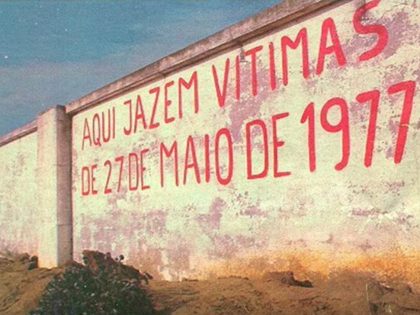
Lara Pawson's book about the complex and violent events on and after the 27th of May, 1977: the date of a supposed coup d’etat in Luanda, Angola.