Why we can’t breathe
The last few years have revealed that, particularly at the state level, justice for Black Americans is an impossibility.
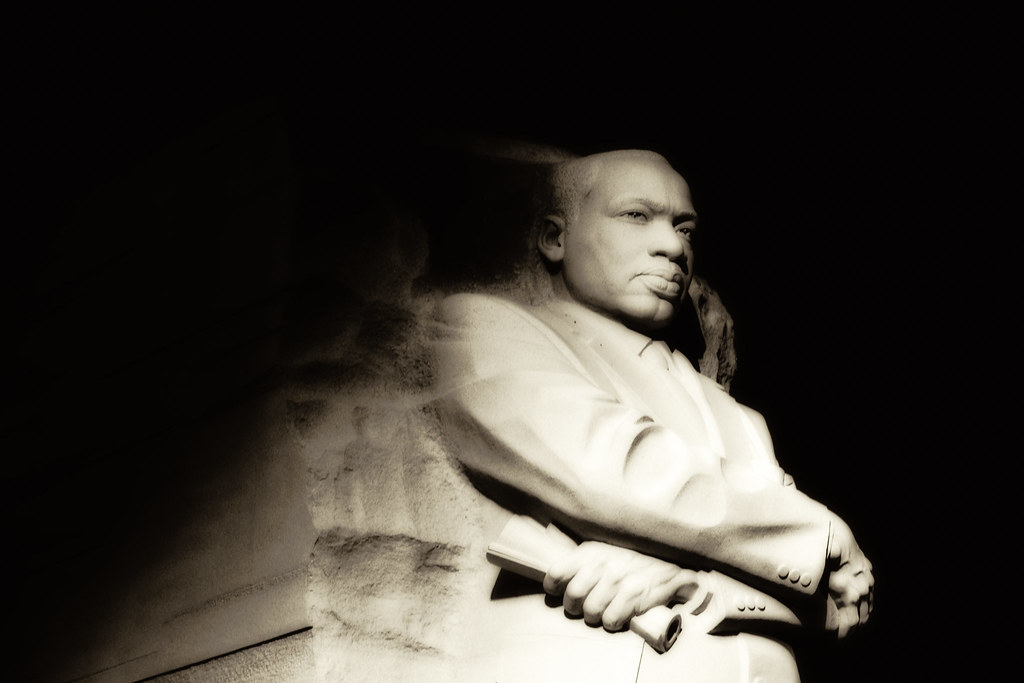
Image: Johnny Silvercloud via Flickr.
Unlike with the protests after George Zimmerman’s acquittal of Trayvon Martin’s shooting death in 2013, the nationwide protests following the grand jury decision not to indict police officer Daniel Pantaleo for choking Eric Garner to death on Staten Island, show no sign of losing momentum. Many wonder why the protesters’ rage is boiling over at this particular moment; after all, state and state-sanctioned violence against black bodies in the United States is not new.
The Staten Island grand jury’s failure to indict Daniel Pantaleo for the death of Eric Garner was seemingly the last straw, a week after Darren Wilson escaped being indicted for Mike Brown’s shooting death in Ferguson, MO. It follows countless other police killings or their families denied remedy by the American criminal justice system. Black rage against these injustices has been brewing very publicly–particularly via social media–for quite some time, and has now boiled over.
The last few years have revealed that, particularly at the state level, justice for Black Americans is an impossibility. Indeed, white supremacy flourishes under American federalism, which gives states the jurisdiction to terrorize disempowered citizens pursuant to state law. Florida’s “Stand Your Ground” law somehow empowers random white people to shoot black people of whom they are afraid, but not black women defending themselves against domestic abusers who boast, under oath, of their abuses. In North Carolina, police refused to conduct a thorough investigation into Lennon Lacy’s suspected lynching. In all of these cases and more, unless the federal government intervenes, the case is closed and justice is permanently unserved, It is all perfectly legal, perfectly racist, and perfectly American.
For many black Americans, the shame of realizing that no amount of compliance and achievement will guarantee you the protections of American citizenship, or even the most essential of human rights–life–has left them short of breath.
Neither voting nor higher education, nor a black president, can keep black people alive in 21st century United States. Negroes had no rights white men had to respect in 1896, and Eric Garner’s widow will live out the rest of her days knowing that the same was true in 2014. And so, there is revolt, because white supremacy cannot be reformed, but only overthrown, less it continue to choke the life out of its permanently disfavored citizens. Because there is no justice in the law, protesters have taken to the streets, in search not of equality within an oppressive system, but liberation from it.


