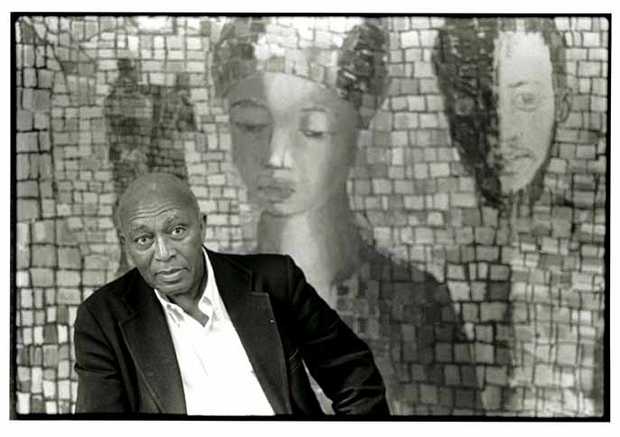
When the Johannesburg Art Gallery bought one of Mr. [Gerard] Sekoto’s paintings in 1940, they had to hire him as a janitor so that he could see his own art on display—circumventing the law outlawing black people from entering the country’s museums.

Now considered one of the most important 20th century South African artists, Sekoto left South Africa for Paris, France, in the late 1940s, where he died in 1993. In October 2009 his painting “The Milkman” (painted between 1945 and 1947) was sold for more than $542,000.

The Wall Street Journal.

Further Reading

No one should be surprised we exist

The documentary film, ‘Rolé—Histórias dos Rolezinhos’ by Afro-Brazilian filmmaker Vladimir Seixas uses sharp commentary to expose social, political, and cultural inequalities within Brazilian society.

Reading List: Barbara Boswell

While editing a collection of the writings of South African feminist Lauretta Ngcobo, Barbara Boswell found inspiration in texts that reflected Ngcobo’s sense that writing is an exercise of freedom.

Kenya’s stalemate

A fundamental contest between two orders is taking place in Kenya. Will its progressives seize the moment to catalyze a vision for social, economic, and political change?

An annual awakening

In the 1980s, the South African arts collective Vakalisa Art Associates reclaimed time as a tool of social control through their subversive calendars.

More than a building

The film ‘No Place But Here’ uses VR or 360 media to immerse a viewer inside a housing occupation in Cape Town. In the process, it wants to challenge gentrification and the capitalist logic of home ownership.